A washer that fits an M8 bolt can still fail because its outside diameter, thickness, hardness, edge condition, or material does not suit the joint. By the end, you will be able to turn the application into a clear washer specification, compare manufacturers on production evidence rather than catalogue labels, and identify when a plain washer is the wrong component.
Key takeaways
- Define whether the washer spreads load, seals, retains, spaces or resists loosening.
- Match inside diameter, outside diameter, thickness and flatness to the joint.
- Specify material and finish from temperature, corrosion and load conditions.
- Require drawings, material certificates, inspection records and sample approval before ordering.
Which washer type matches the job?
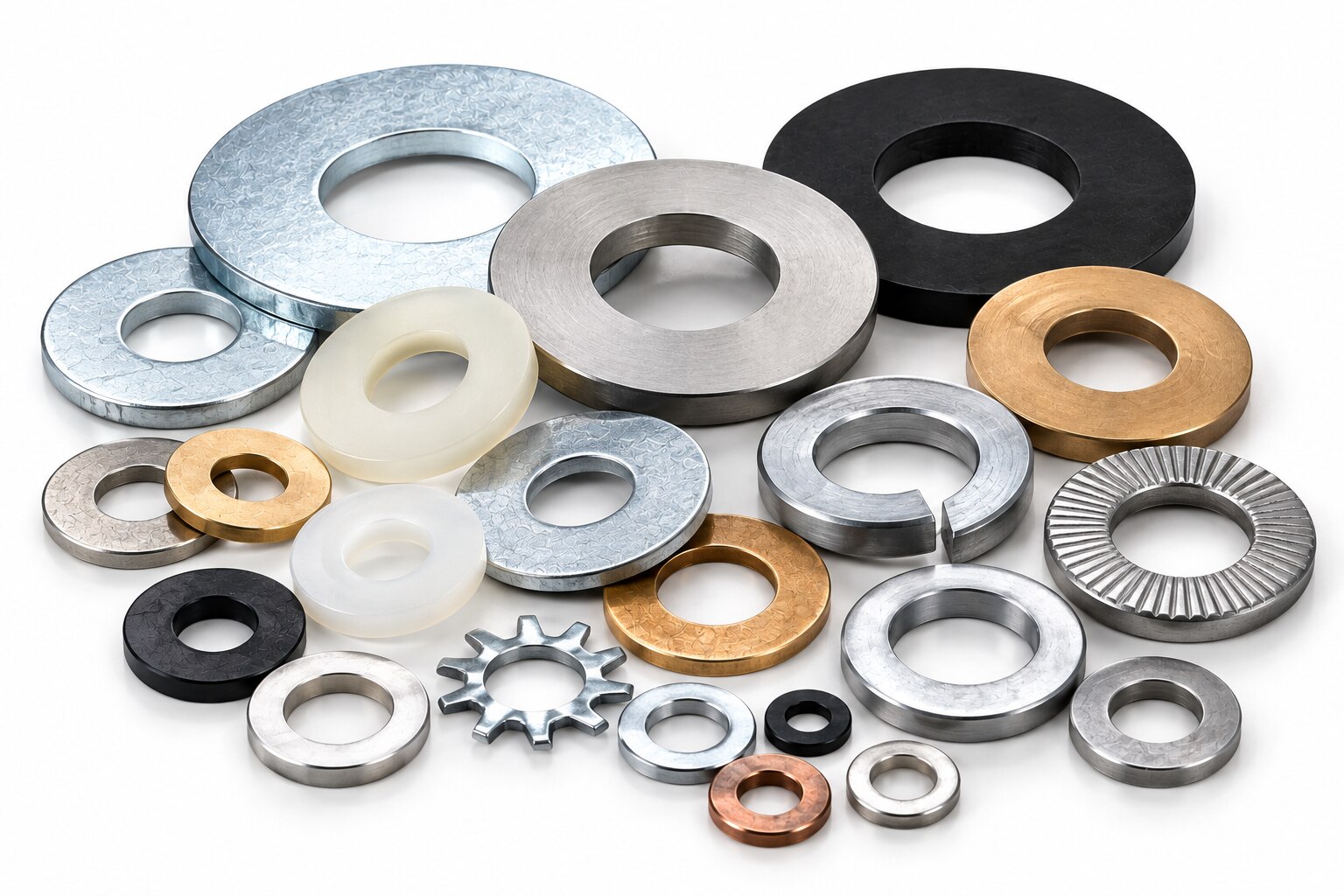
Decide what the washer must do before you state its nominal size: spread clamp load, resist loosening, seal a passage, retain a component, or set a controlled gap. The same M8 fastener can require a thin shim, a large bearing washer, or a load-deflection spring part.
| Type | Primary function | Specify before size |
|---|---|---|
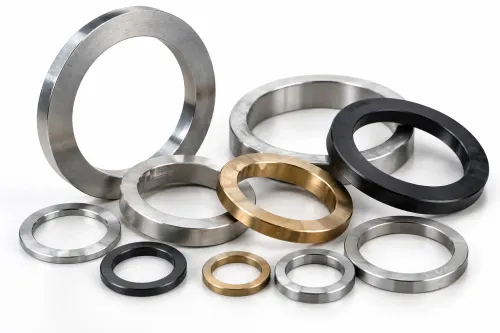
| flat washers | Distribute load, prevent pull-through, provide isolation, or create a bearing surface | Bearing area, thickness, flatness, material, and ISO 7089 or ISO 7093 series |
| spring washers | Add preload or accommodate movement | Working deflection, installed height, preload range, fatigue life, and loading direction |
| sealing washers | Block oil, water, air, or process fluid | Seal material, compression range, mating surface, temperature, and leakage requirement |
| retaining washers | Hold a shaft, pin, or panel component in position | Retention method, groove or hole geometry, edge condition, and removal force |
| shim washers | Set clearance, alignment, or stack height | Exact thickness tolerance, flatness, surface finish, and stack-up requirement |
Treat conical, wave, and curved spring washers as engineered springs, not flat-washer replacements. Ordering only by diameter can deliver the wrong spring rate and lose preload.
For stamped parts, specify burr height, edge break or radius, and burr orientation. This matters at sliding interfaces, oil-seal assemblies, and thin retaining parts. Confirm flatness on a defined surface plate and datum; a visibly uneven washer can create uneven clamp load or dish during tightening.
How do size, flatness and standards determine fit?
A washer fits only when its bore, outside diameter and thickness match the fastener, clearance-hole diameter, clamped surface and applied load. Nominal size alone is not enough: an M8 washer can have different bearing area depending on its series.
Confirm these dimensions on the assembly drawing:
- Fastener fit: specify the maximum shank diameter, plating thickness, assembly clearance and expected misalignment. Excessive inside diameter reduces bearing area and can let a washer load against the edge of a slotted bracket.
- Surface coverage: choose the outside diameter to cover the hole and spread force across sound material without projecting into a radius, slot or unsupported edge.
- Load capacity: specify thickness, hardness and the expected clamp load. A thin or soft stamped washer can dish under a high-strength bolt, changing preload and allowing the joint to loosen.
- Standard and series: identify whether the part follows ISO 7089, ISO 7090 or DIN 125, rather than accepting “M6,” “M8” or “M10” alone. ISO 7089 describes normal-series plain washers; ISO 7090 and DIN 125 identify different dimensional details, so verify the drawing.
Flatness needs a measurement, not a visual approval. Measure the washer on a defined surface plate against a stated datum; record dish, waviness, burr height and hole-to-outside-diameter concentricity. A micrometer checks thickness but misses eccentric holes and burr interference. For production lots, request inspection results tied to the lot number.
Which material and finish suit the application?
A washer that fits the bolt can still flatten, corrode or damage the joint. Compare the material grade, hardness and tensile or yield requirement with the clamp load, then match the finish to oil, coolant, salt, wash-down water and temperature.
| Material | Strength and hardness | Corrosion behaviour and finish | Suitable use |
|---|---|---|---|
| carbon steel | Strong range of grades; verify hardness for high loads | Needs plating, coating or paint in wet service | General fastening and high-load joints when protected |
| stainless steel | Corrosion-resistant, but grade and hardness vary; galling needs control | Passivation helps preserve the surface; dissimilar metals can create galvanic attack | Outdoor, wash-down and chemical exposure |
| galvanized steel | Moderate strength unless a specified grade is used | Zinc coating protects exposed steel; punched edges and scratches can corrode first | General outdoor fastening with compatible hardware |
| copper and aluminium washers | Soft, so sustained clamp load can cause creep or deformation | Copper supports sealing and electrical contact; aluminium provides low mass and conductivity | Sealing or electrical isolation where load is limited |
For a high-strength bolt or loaded spring or bracket assembly, ask for the washer hardness, tensile or yield-related requirement and product standard. A soft stamped washer can dish under the bolt even when its outside diameter and thickness are correct.
Treat zinc plating on hardened steel as a process specification, not a colour. Require cleaning and pickling controls, post-plating baking where applicable, coating thickness and inspection records to address hydrogen embrittlement. Check the washer, fastener and bracket as one galvanic system; the interface can fail before the washer’s exposed face.
When is a plain washer the wrong choice?
A plain washer is wrong when its only job—spreading clamp load—does not address the joint’s failure mode. If vibration loosens the fastener, fluid escapes, electrical contact must be isolated, or the washer itself carries cyclic load, select a purpose-built solution.
- Use a locking solution when transverse vibration or repeated torque loss threatens the joint. Serrated washers suit compatible surfaces but can damage coatings and lose effectiveness when the joint separates. Consider a prevailing-torque nut, threadlocker, a positive locking feature, or a Nord-Lock-style wedge-locking system for strongly vibrating or safety-critical assemblies.
- Use a sealing washer when the fastener passes through a fluid or dust boundary. Specify the seal material, temperature range, fluid compatibility, compression and surface finish; a plain washer only distributes force and will not stop leakage.
- Use an isolating washer when the joint must prevent electrical contact, galvanic interaction or vibration transfer. Check dielectric strength, creep under clamp load and temperature before choosing polymer, fibre or another insulating material.
- Use a spring washer only when you can define working deflection, installed height, preload and fatigue life. Wave, conical and curved washers are load-deflection components; a split lock washer is not a universal vibration cure.
- Use a hardened or high-temperature washer when clamp load, heat or cycling exceeds ordinary stamped-steel capability. Require hardness and the applicable product standard, then check contact pressure, fretting, edge cracking and washer bending—not dimensions alone.
What evidence should you require from the manufacturer?
Do not approve a supplier on a dimension sheet alone. Require evidence that the proposed press, progressive die, material grade and finishing route can hold production tolerances for custom stamped washers, not just make one acceptable part.
| Evidence | Strong comparison point | Warning sign |
|---|---|---|
| Production capability | Press capacity, strip-width range, tool history, monthly output and capacity reserved for your order | Prototype made by laser cutting or manual deburring |
| Inspection | Optical or vision inspection for diameter, burr height, flatness and concentricity; records for thickness, coating coverage and surface defects | Micrometer readings only; no hole-to-OD or edge inspection |
| Traceability | Heat or coil lot, tool number, production date, operator and coating batch linked to each shipment | “Material certificate available” without lot identification |
| Total cost | Tooling, setup, scrap, sorting, plating, inspection, packaging, freight and the cost of line stoppage shown separately | Lowest piece price excludes tooling, rework or minimum-order inventory |
| Production-intent sample | Parts made with the production material, tool, coating and heat treatment, approved before release | Prototype sample differs from the planned process |
Ask for the drawing to state burr orientation, edge break or radius, and maximum burr height. For zinc-plated high-strength steel, require the hydrogen embrittlement control plan: cleaning and pickling controls, plating details, post-plating baking where applicable, coating thickness and inspection records.
Whether you audit Shankar Spring And Coil Works or another supplier, retain the approved sample, inspection report and material certificate as the baseline for every lot. A soft washer that meets diameter limits can still flatten in service.
Related product
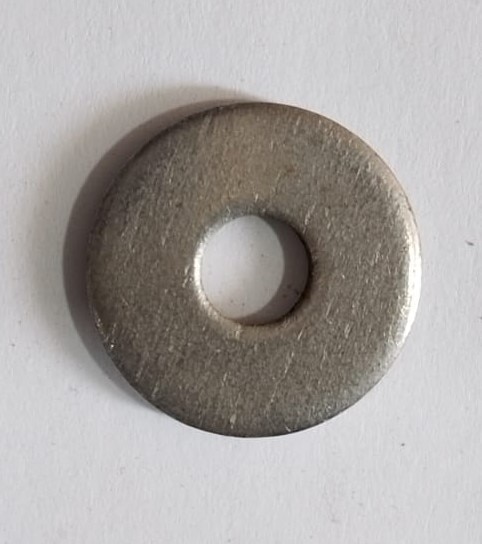 | Washer Washer Washer |
Frequently asked questions
How do you choose the right industrial washer type?
Define the job first: use a plain washer to spread clamp load, a shim to set a gap, a sealing washer to close a passage, a retaining washer to hold a component, or a spring washer when controlled deflection or loosening resistance is required.
Which dimensions determine whether a washer fits?
Check the washer’s inside diameter against the fastener, outside diameter against the bearing surface, thickness against available space, and flatness against the joint requirements. Confirm the specified standard and tolerances on the drawing.
How do you select washer material and finish?
Select material and finish from the application’s load, temperature, moisture, chemicals and galvanic-contact risks. Compare options such as carbon steel, stainless steel, brass or a coated steel grade against the service environment.
What evidence should you request from a washer manufacturer?
Request a dimensioned drawing, material certificate, stated standard, tolerance details, surface-finish information, inspection records and sample approval documents. Ask for batch identification so supplied parts can be traced.