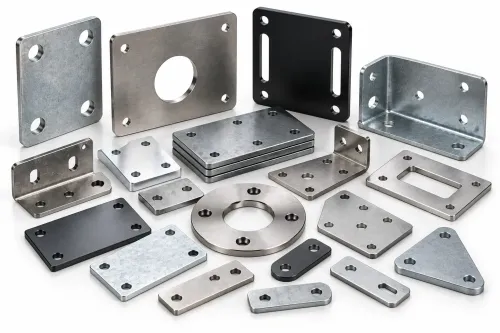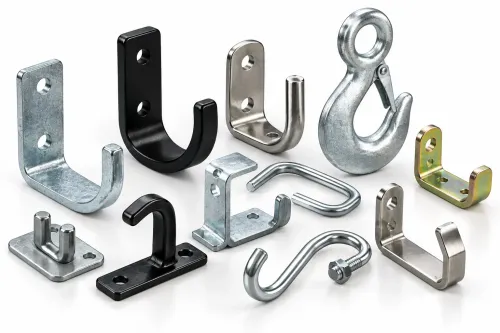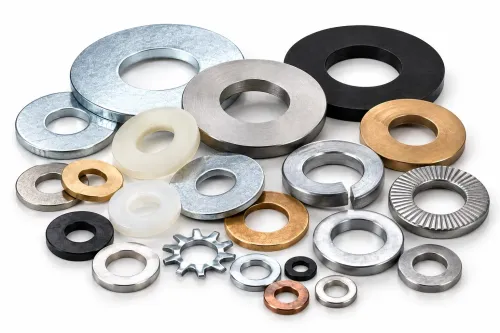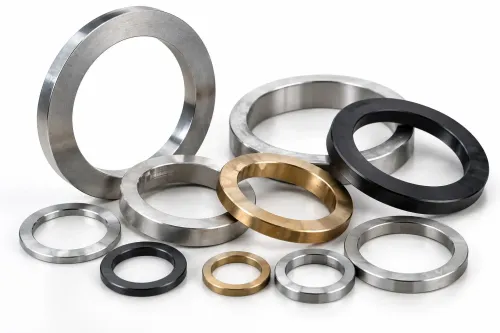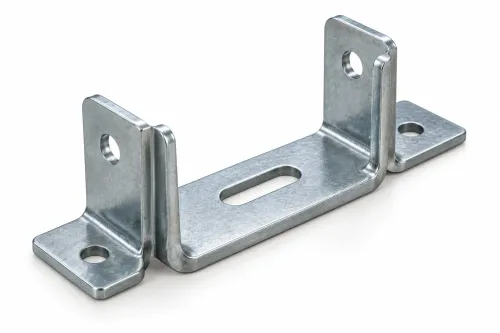
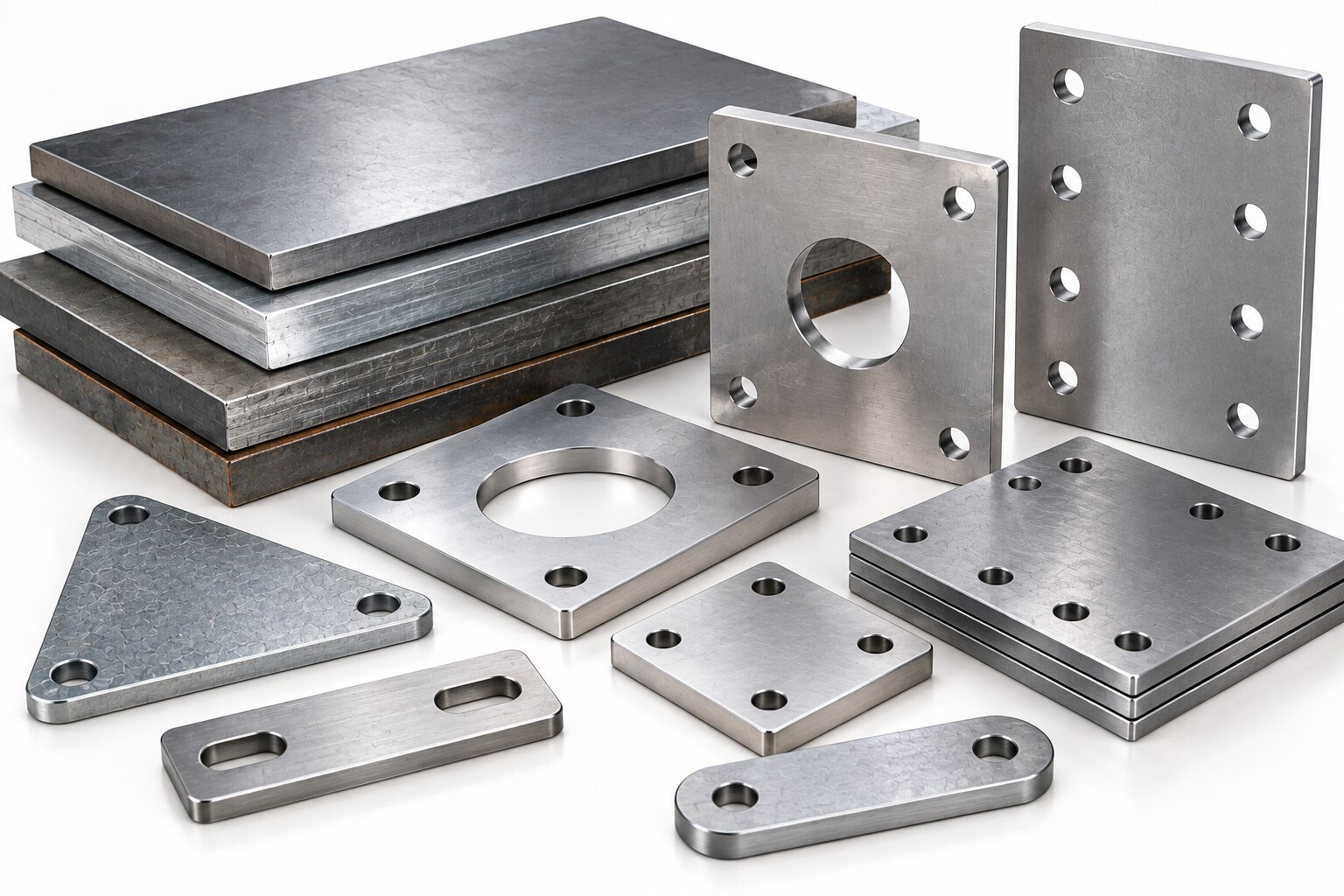
A quotation for an industrial metal plate is only comparable when it defines the material, product form, dimensions, condition, tolerances and manufacturing route. By the end, you will be able to write a purchase specification, compare supplier offers on more than price, and inspect the delivered plate before it causes fitting, forming or fatigue problems.
Key takeaways
- Specify grade, thickness, condition, finish, dimensions and tolerances before requesting quotes.
- Choose plate material and condition based on forming, welding, corrosion and service requirements.
- Compare cutting, packing, testing, delivery and minimum-order costs—not only price per kilogram.
- Check dimensions, surface condition, grade markings and documents before releasing plate to production.
Write a Complete Plate Specification Before Requesting Quotes
Suppliers quote the same part only when your industrial metal plate specification removes room for interpretation. “Metal plate, 3 mm” leaves the product form, grade, finish and allowable variation unresolved, so compare offers only after defining:
1. Product form: mill-edge sheet, slit strip, coil or cut blank, plus the governing product standard.
2. Size: length and width, quantity, grain or rolling direction, and whether dimensions are nominal or finished.
3. Thickness: nominal thickness and thickness tolerance. Add flatness tolerance if the plate must sit against a seal, fixture or mating part.
4. Material: material grade and condition, such as annealed 304 stainless or cold-worked 301 stainless, plus the required temper, hardness or tensile range.
5. Edges and geometry: edge condition, burr limit, corner radius, hole pattern, hole diameter and positional tolerance. State bend angles, bend radii and the direction of bends.
6. Surface: pickled, bright-annealed, oiled or dry, with a measurable roughness range. “Smooth finish” cannot be checked consistently.
7. Documents and traceability: require the heat or coil number, chemical composition, mechanical results, thickness and condition on a certificate linked to the supplied batch. Request EN 10204 Type 3.1 when it matches your purchasing requirement.
For spring parts, seal retainers and fatigue-loaded brackets, add allowable scratches, die marks, burrs and rolling-direction requirements. A generic sheet certificate cannot prove that the specified blanking and forming route will deliver the required spring force or fatigue life.
Choose the Metal, Thickness and Material Condition for the Job
A heavy load demands yield strength and stiffness; corrosion, heat, weight, conductivity and forming often decide which grade supplies them at acceptable cost. Do not choose stainless steel by label alone: a stainless spring touching carbon-steel tooling, zinc, aluminium or a wet conductive seal can develop localized galvanic corrosion.
| Metal | Choose it when | Check before buying |
|---|---|---|
| carbon steel | High load, stiffness and low cost matter in a dry or protected environment | Specify coating, paint, oil or another corrosion barrier |
| stainless steel 301 and 304 | 301 suits formed spring parts requiring cold-worked strength; 304 suits corrosion-resistant formed parts without spring-load demands | Order the required temper; annealed 304 is not equivalent to spring-temper 301 |
| galvanized steel | You need carbon-steel strength with zinc protection for atmospheric exposure | Confirm coating mass, forming radius and exposed cut-edge protection |
| aluminium | Low weight, corrosion resistance and electrical or thermal conductivity matter | Allow for lower stiffness and check alloy-specific forming limits |
| brass | Conductivity, corrosion resistance, machinability or a non-ferrous contact surface matters | Compare strength, cost and work-hardening against aluminium |
Buy the thinnest plate that passes load, deflection, hole-tear and forming calculations; increasing thickness raises stiffness sharply but also increases weight, drilling force, bend allowance and material cost. For a stamped spring, bracket or seal retainer, specify the condition as well as grade: annealed, cold-rolled, hardened-and-tempered or spring-temper.
Verify thickness, hardness or tensile range, flatness, burrs, rolling direction and first-off spring load. Request a heat- or coil-traceable EN 10204 type 3.1 certificate when applicable.
Match Product Form, Geometry and Cutting Process to the Part
Buy the form that matches how the part will enter production. The cut plate versus sheet and strip decision affects feeding, flatness, edge quality, scrap and forming cost.
| Option | What it means | When it applies |
|---|---|---|
| Sheet | Flat mill-edge material supplied as individual pieces | Brackets, panels and parts made from standard stock size |
| Strip | Narrow slit material with controlled width and edges | Stamped springs, seal retainers and continuous feeding |
| Coil | Long wound strip supplied for decoiling and press work | High-volume stamping where uninterrupted feeding reduces handling |
| Cut plate | Sheet or plate cut to a specified blank size | Large parts, low volumes or shapes that do not suit standard sizes |
| Fabricated plate | A cut blank that has been bent, formed, welded or machined | Ready-to-assemble brackets, guards and structural components |
Choose a standard stock size when it fits the nesting plan; custom cutting adds handling, programming and scrap. Put “mill-edge sheet,” “slit coil” or “cut blank” on the purchase order, not merely “metal plate.”
Use laser cutting for accurate profiles and holes in thin-to-medium gauge material, but inspect heat-affected edges. Use plasma cutting for thicker steel when speed matters and a rougher, heat-affected edge is acceptable. Use waterjet cutting when you need no heat-affected zone or must protect a heat-sensitive alloy.
Punching suits high-volume strip, provided burr direction and die marks are controlled.
Form the blank with a press brake or stamping die, then verify minimum bend radius, rolling direction, flatness and coil set. A first-off functional check can reveal springback, cracking or seal interference before full production.
Compare Quotations Beyond the Per-Kilogram Price
A low per-kilogram rate can become the expensive quote after cutting, inspection and freight are added. Compare each offer on the same delivered-part basis, including the cost of rejected plates, delayed production and extra finishing.
| Check | Quote with stated detail | Quote with hidden risk |
|---|---|---|
| Price basis | Separates material, cutting, freight and taxes | Gives one kilogram rate with no cost breakdown |
| Commercial terms | States minimum order quantity, payment terms, setup and tooling charges | Adds these charges after order placement |
| Traceability | Includes a material certificate EN 10204 3.1 linked to the heat or coil, with chemistry, mechanical results, thickness and condition | Provides only a grade declaration |
| Edge and surface | Defines tolerance, flatness, rolling direction, burr removal and packaging | Says “standard finish” or leaves edge condition blank |
| Delivery | Gives production lead time, dispatch date, packing method and partial-shipment rules | Offers an unqualified delivery estimate |
| Acceptance | Names inspection documents, rejection limits and replacement responsibility | Treats approval as acceptance of whatever arrives |
For a fatigue-critical blank, ask whether the quoted process is laser cutting, punching or sawing. A punched burr, laser heat-affected edge or scratch can start a crack even when the steel passes tensile tests. Confirm the minimum bend radius and edge condition rather than paying later for deburring or rework.
Shankar Spring And Coil Works is a useful comparison point when a plate will become a spring-loaded bracket or retainer: judge the quote by the formed part’s load and fit, not only by the incoming plate’s certificate. Include sample approval and first-off testing in the commercial terms.
Related product
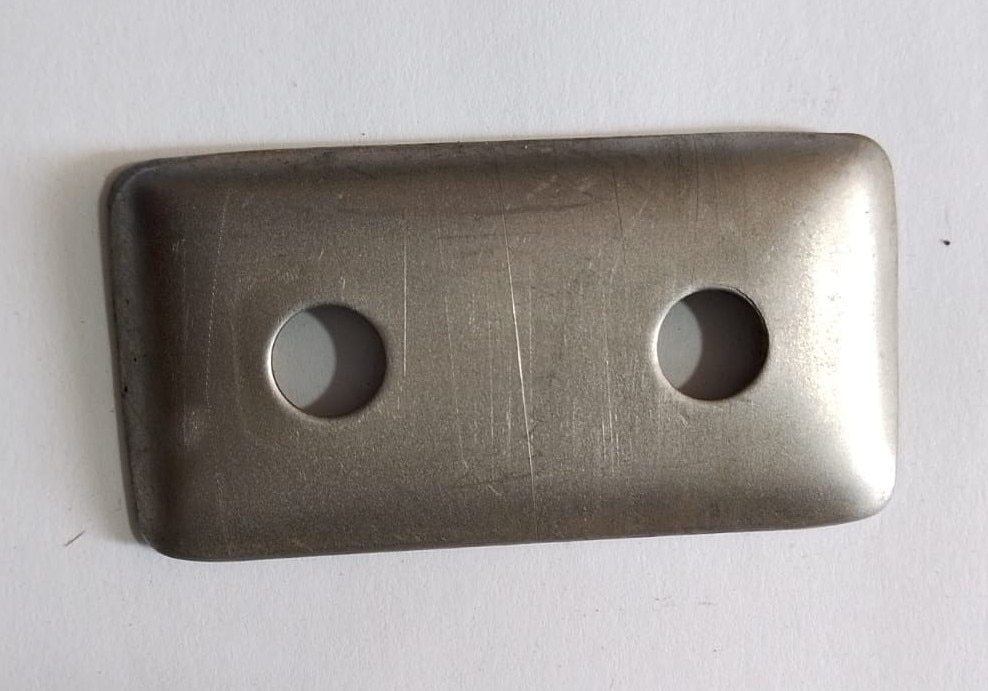 | Metal Plate Metal Plate View product → |
Verify the Delivered Plate Before It Enters Production
Release the plate only after you prove its identity, dimensions, condition and first-off performance. A certificate tied to the actual heat or coil cannot replace checks on the delivered lot.
1. Match the paperwork to the order. Confirm the grade, temper or hardness, thickness, product form, dimensions, heat number and coil or batch number. For critical material, request an EN 10204 type 3.1 certificate with chemical composition and mechanical results.
2. Measure thickness at multiple points across the plate with a micrometer and thickness gauge. Compare the readings with the ordered tolerance, because thickness changes spring force, formed height, die clearance and seal-retainer interference.
3. Check flatness, surface defects, burrs and edge damage under good lighting. Record the flatness result rather than accepting a plate that rocks on a reference table.
4. Verify the rolling direction against the drawing and required bend or flexure direction. Confirm the marking or certificate identifies it; the wrong orientation can increase cracking, springback and fatigue failures.
5. Inspect the hole pattern with a coordinate measurement method or a checking fixture. Confirm hole positional tolerance, diameter, burr height and edge distance before the plate reaches the press.
6. Complete hardness and decarburization inspection when the part depends on spring load or fatigue life. Bulk hardness can pass while a softened surface layer reduces performance; request a metallographic or microhardness profile when the order specifies a decarburization limit.
Form one first-off part and test its fit, bend cracks, permanent set, spring force or seal interference. Approve the lot only after that component passes the mating assembly check.
Frequently asked questions
What should an industrial metal plate specification include?
State the metal grade, thickness, material condition, surface finish, plate dimensions, dimensional tolerances, quantity, cutting requirements and required inspection documents.
How do you choose metal, thickness and material condition?
Match the grade and condition to the part’s strength, corrosion, welding, forming and service-temperature requirements, then specify the required thickness and tolerance.
What should you compare besides the quoted price per kilogram?
Compare the product form, cutting method, usable yield, minimum order, testing documents, packing, freight, delivery time and charges for non-standard dimensions.
What should you verify when industrial metal plate arrives?
Check the purchase order against the packing slip, then verify grade markings, thickness, length, width, flatness, surface defects, cut edges, quantity and material certificates before production.