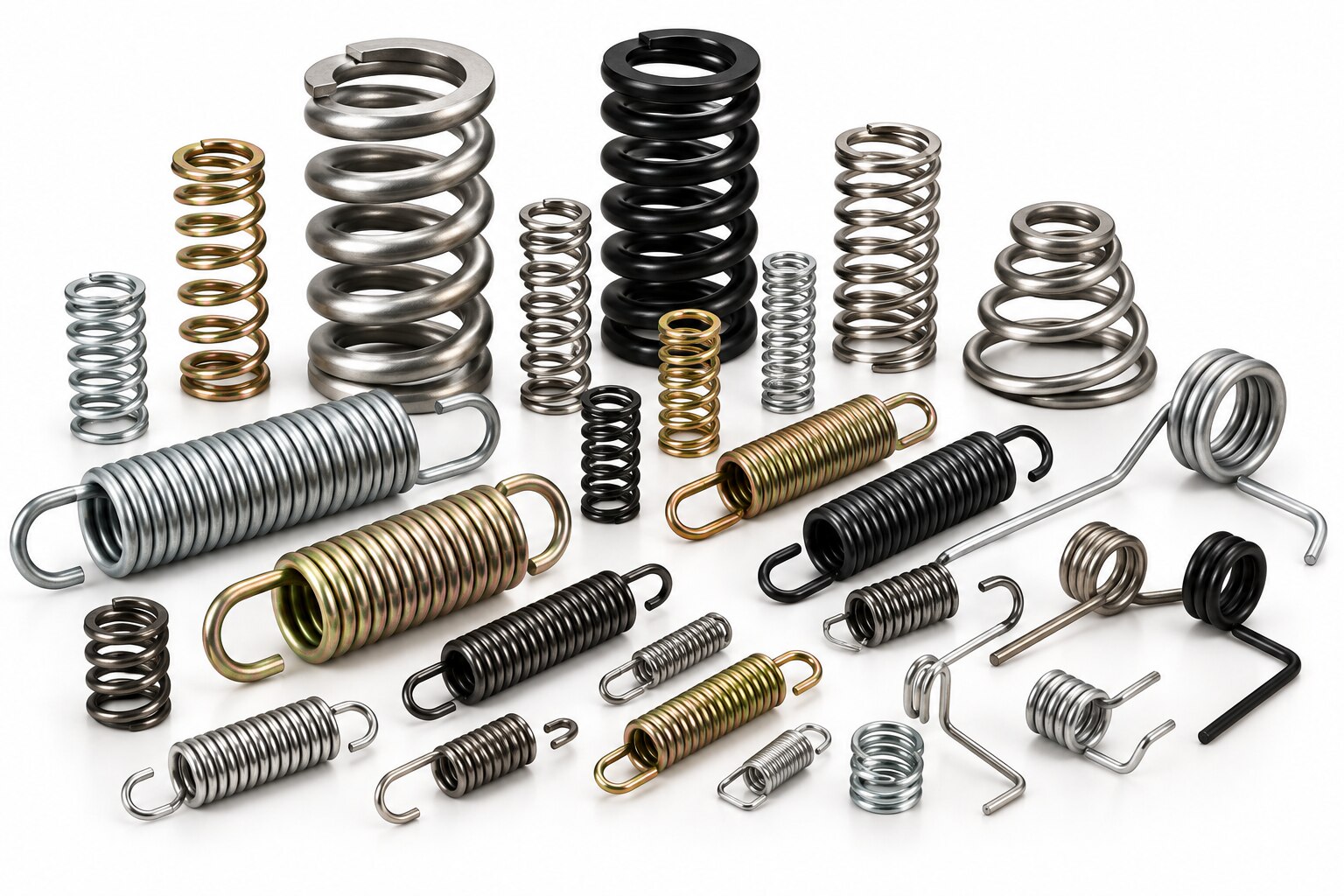
A low piece price and one acceptable sample do not prove that a supplier can repeat your spring design across monthly production lots. Use a defined screening sequence to check specifications, manufacturing ownership, process capability, capacity, delivery history, and total delivered cost before you release recurring orders.
Key takeaways
- Send a controlled drawing with material, tolerances, quantities, and revision level.
- Ask how the supplier controls forming, heat treatment, testing, and traceability.
- Approve repeat samples before moving to regular production.
- Compare freight, packaging, rejects, tooling, and payment terms—not unit price alone.
Send a Complete Specification Before You Compare Suppliers
Comparable quotations require the same technical brief, not just a part number. Send the industrial spring manufacturer a controlled spring drawing stating the application, quantity, annual demand, inspection requirements, packaging, and revision level. A vague request for “spring steel” invites different materials, processes, and acceptance limits.
Include these details in the enquiry:
- Material grade, wire diameter, applicable standard, heat or coil-lot traceability, tensile range, surface condition, decarburization limits, inclusions, and prior drawing or heat-treatment history. Ask for a certificate identifying the lot; ASTM A313/A313M covers stainless-steel spring wire and ASTM A228/A228M covers high-carbon music wire.
- Wire diameter tolerance, outside or inside diameter, free length, solid height, number of coils, end form, squareness, spring rate, specified load, load height, and operating deflection. Do not accept tensile strength alone as proof of suitability.
- Plating or acid-cleaning details, including hydrogen-embrittlement controls, baking requirements, strength limits, and verification tests for high-strength wire.
- Acceptance data: load, rate, free length, diameter, and end geometry, with the sampling plan and Cp/Cpk or Pp/Ppk basis.
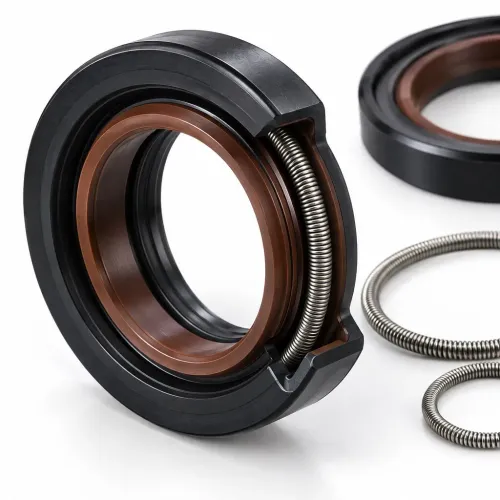
For oil-seal garter springs, specify the working condition rather than compression-spring dimensions alone.
| Requirement | State in the enquiry | Why it matters |
|---|---|---|
| Compression spring | Load at height, rate, solid height | Prevents stiffness and assembly disputes |
| Garter spring | Free or installed circumference, radial load or torque, joint type | Defines seal performance |
| All springs | Quantity per lot, inspection level, packaging | Makes delivered-cost quotations comparable |
| Plated springs | Process and embrittlement controls | Prevents premature cracking |
Prove That the Supplier Owns the Manufacturing Process
A supplier who cannot show where your springs are made cannot prove that production is under control. Treat spring manufacturer verification as a document-and-site check, not a claim on a quotation.
1. Visit the factory address on the purchase documents. Match the premises to the supplier’s legal name, and inspect the listed coiling machine, wire storage, end-forming tools, stress-relieving equipment, grinding stations, and packing area. A trader will usually redirect you to an undisclosed subcontractor.
2. Ask for the machinery list, machine numbers, maintenance records, setup sheets, and operator records for your spring design. Then request recent production data for load at height, free length, rate, diameter, and end geometry, including the sampling basis and Cp/Cpk or Pp/Ppk results across machines and lots.
3. Inspect the inspection equipment: calibrated load testers, vernier or optical measurement tools, force gauges, and any hardness or coating instruments used for acceptance. A one-time dimensional report does not demonstrate repeatability.
4. Require a run-at-rate using production equipment and normal operators. Confirm that coiling, stress relieving, grinding, testing, and packing capacity meets your recurring schedule without unapproved subcontracting.
5. For critical parts, demand traceability from finished spring to wire heat, machine, tooling revision, operator or shift, inspection results, and packing lot. Put written approval controls around wire grade, machine, heat treatment, plating, end forming, and site changes.
If plating or acid cleaning follows production, define hydrogen-embrittlement controls, baking, tensile limits, and verification tests. For automotive parts, check contractually applicable IATF 16949 controls; ISO 9001 alone is not equivalent.
Qualify Repeatability Before Releasing Regular Production
Approve the supplier in stages, moving from design evidence to production evidence before releasing recurring orders. A passed sample proves that one batch met the drawing; it does not prove that the next five batches will match it.
1. Complete sample approval against the signed drawing. Check wire grade and diameter, coil diameter, free length, number of coils, end geometry, load at specified height, and rate. Require a material certificate showing the heat or coil-lot number and wire standard, such as ASTM A313/A313M or ASTM A228/A228M.
2. Order a pilot lot made on the intended production equipment, with normal operators and normal inspection methods. Include a run-at-rate demonstration; a supplier that passes ten samples but relies on overtime or subcontracted coiling is not qualified for bulk supply.
3. Perform first article inspection on parts from that pilot lot. Review dimensional results, load and rate readings, material records, process-flow and control-plan documents, and measurement-system evidence. Request PPAP when your quality system requires it.
4. Review production-data evidence, not a one-time report. Ask for a Cp Cpk spring capability study, or Pp/Ppk where appropriate, covering load, free length, rate, diameter, and end geometry; confirm the sample size, lots, machines, and shifts included.
5. Sign the process release only after lot traceability links each spring to wire heat, machine, tooling revision, operator or shift, inspection results, and packing lot. Require written approval for wire, machine, heat-treatment, plating, end-forming, or site changes before the next batch.
Check Capacity and Delivery Against Your Actual Demand
Match the supplier’s production capacity to your peak month, not your average order. Provide the forecast, firm schedule, peak quantity, lot size, and notice period for changes; ask for available machine hours and shifts across coiling, stress relieving, grinding, testing, and packing.
Require a run at rate using production equipment, normal operators, standard inspection, and normal packing. Compare demonstrated output with your peak weekly requirement after planned maintenance, setup time, and rejects. A sample approval proves dimensions; it does not prove recurring bulk spring supply without overtime or subcontracting.
Ask for these records before releasing regular orders:
- A capacity plan showing machines, shifts, bottleneck operations, monthly output, maintenance downtime, and the maximum quantity the supplier can add without changing the process.
- A production trial report showing output per shift, rejection rate, cycle time, and results at the required load, free length, rate, diameter, and end geometry.
- Cp/Cpk or Pp/Ppk data for assembly-critical characteristics, with the sample size, machines, shifts, and lots identified.
- Twelve months of on time delivery records, including promised date, actual date, quantity shortfalls, and corrective actions.
- A recovery plan for demand increases, urgent schedule changes, wire delays, machine breakdowns, and rejected lots. Reject plans that rely on an unnamed subcontractor.
- Lot traceability linking finished springs to wire heat, machine, tooling revision, operator or shift, inspection results, and packing lot.
For oil-seal springs, include installed-load or torque checks; free length and visual inspection cannot reveal joint projection or pitch variation that damages the elastomer.
Compare the Commercial Offer on Total Delivered Cost
Reject the lowest piece price if the quotation leaves delivery costs and failure exposure undefined. A sound spring quotation comparison converts every offer into a delivered cost per accepted part, then tests whether the commercial terms can support your release schedule.
| Cost line | What to compare | Continuity risk |
|---|---|---|
| Piece price | Price at the quoted material grade and quantity | A low price can hide later surcharges |
| Tooling charges | New tooling, setup fees, and amortization period | You may pay again after a design or volume change |
| Minimum order quantity | MOQ against your monthly consumption and storage limit | Excess stock ties up cash; a high MOQ can delay replenishment |
| Quality and finish | Inspection, test, plating or coating, and special packaging charges | Unpriced controls can trigger disputes or skipped checks |
| Logistics and recovery | Freight from the Pune area, rejected-lot sorting, replacement freight | One mixed lot can cost more than the quoted savings |
| Traceability documents | Lot records linking finished springs to wire heat, machine, setup revision, inspection, and packing lot | You cannot contain a field failure without a defined production population |
For plated high-strength springs, put hydrogen-embrittlement controls in the purchase specification: plating process, tensile-strength limits, baking time and temperature, and verification testing. Ask Shankar Spring And Coil Works for the same cost breakdown and records you request from every Pune-area bidder; uniform questions expose unequal assumptions.
Select the supplier whose quote states lead time, price validity, payment terms, replacement responsibility, and capacity for recurring releases. Make the supplier price a run-at-rate demonstration rather than overtime or subcontracted output, because a cheap first lot does not protect your production line.
Related product
 | We supply all types of oil seals springs. We supply all types of oil seals springs in both GI (Galvanized Iron) SS (Stainless Steel). View product → |
Frequently asked questions
What should you include before comparing industrial spring manufacturers?
Send a controlled spring drawing with the application, material, dimensions, tolerances, quantities, annual demand, inspection requirements, packaging, and revision level.
How can you verify that a spring supplier controls its manufacturing process?
Ask for evidence of in-house process control, including forming, heat treatment, inspection, traceability, and records tied to your part revision.
How do you qualify repeatability before regular spring production?
Review samples from a defined production run, measure critical characteristics against the drawing, and approve the results before releasing recurring orders.
What capacity and delivery details should you check?
Compare the supplier’s available equipment, production capacity, lead time, safety stock, inspection time, and ability to meet your actual order pattern.
How should you compare commercial offers for bulk springs?
Calculate total delivered cost, including unit price, tooling, packaging, freight, inspection, payment terms, rejects, and the cost of late deliveries.